A while back, there was the sweetest post going around social media featuring a little girl, weeping and overwhelmed at the prospect of going to her soccer game “unprepared”. Maybe you’ve seen it. As the video progresses, her mother patiently fleshes out the reason behind her sadness and tears, and we come to learn that she is so upset simply because she doesn’t understand the meaning of, “make-up game”. In her innocence and limited exposure to the term, “make-up”, she was distraught over believing with her whole self that she needed to wear make-up to her “make-up game”. It both made me smile and want to reach through the screen to comfort her!
As adults, we can watch something like that and be relieved knowing that her sadness was all for naught. But for her, she was all in with her feelings, truly believing she didn’t have what she needed. From her perspective, she would be showing up to her game unprepared and fearful of the consequences of doing so.
But don’t we do that even as adults? Many times, as we move through life, we see and respond to it through inaccuracies. Just like the little one I mentioned above was overwrought with emotion, we too, can spend a lot of time, energy, and tears impacted and reacting to things that just aren’t true. It may be because of beliefs we’ve held since childhood, or behaviors that we saw modeled for us as we were coming up. We might have misinformation that we haven’t tested for ourselves yet, or even be misled for a season by those we thought were trustworthy. And sometimes it’s just simply, as with the little girl, we have not developed the maturity or capacity to understand yet.
In all of the stories we tell ourselves, it’s God the Father who wants to be the loving parent, patiently relieving us from unnecessary sadness and anxiety. He sees us in our distress, despairing over things he knows may feel very real, but are not. He invites us to take a deep breath, relinquish the misperceptions we’ve come to believe, and allow him to show us our circumstances from his perspective. He presents the truths behind any ideas or narratives we have been telling ourselves or hearing about from others, and is the only one that can be trusted to give us accurate information one hundred percent of the time. God’s perspective, both as the Creator of this world and as our Father, equals true reality. When we come to understand things are they truly are, and align ourselves with his version of our circumstances, we are best positioned to handle whatever we may be facing.
If you want to smile today, watch the video of the little girl distraught about having to show up at her “make-up game” without make-up. Try and see yourself through the eyes of the parent encouraging her little one to believe what is true, and then remember how much God wants to do the same for you and I. Seeing our lives through the eyes of our Father in Heaven really is a game changer.
I had a therapist tell me years ago that one of THE most important things we need to do in life is learn how to grieve. Not a skill we like to think about needing to develop but critical nonetheless.
I don’t think most of us realize how often we move through life either actively in or resisting the grief process. Perhaps both simultaneously. Maybe we just aren’t aware of or know what to do with the feelings we experience.
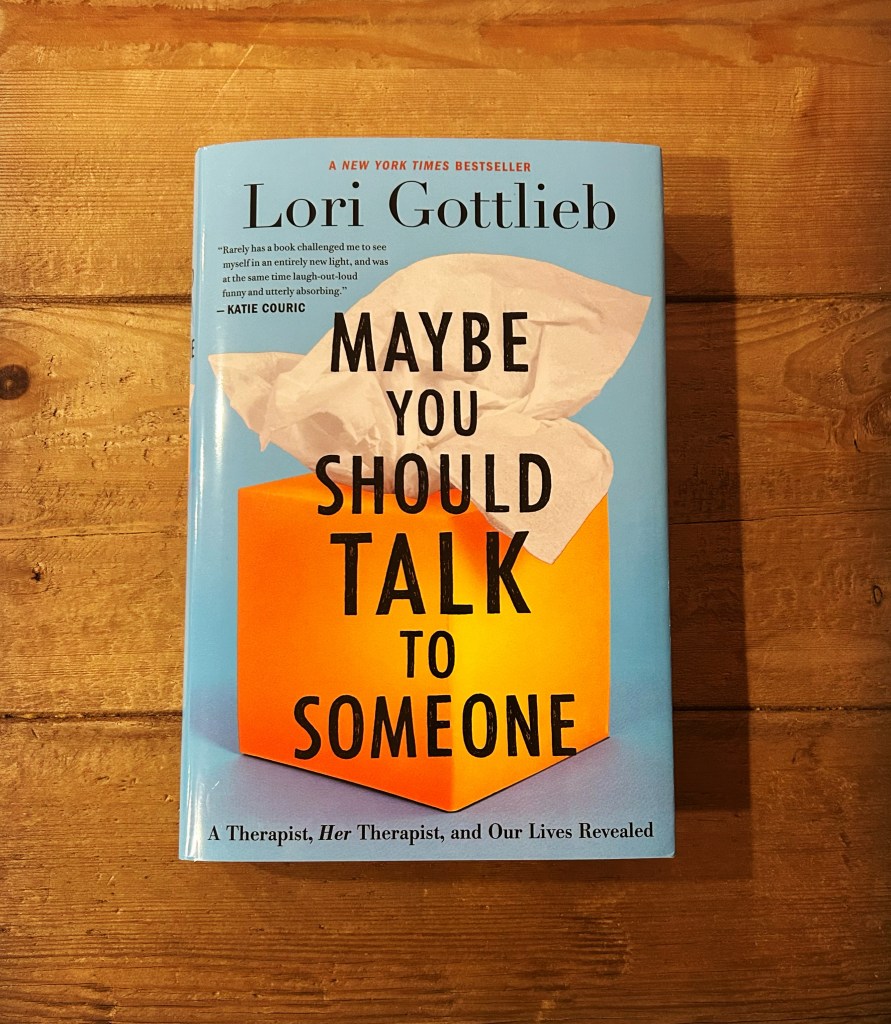
I’ve been wanting to read this book since it came out and there is a reason it’s on the best seller’s list. Lori did an amazing job of weaving the stories of others with her own, and in doing so showed us how the power of being truly seen can change us, especially in our hardest and most vulnerable moments. There are so many insights on many topics, as moved with several people through therapy while simultaneously participating in her own therapy. Here is an excerpt from the book that made me sit back in my chair to try and really let the words sink in:
“Therapists talk a lot about how the past informs the present – how our histories affect the way we think, feel, and behave, and how at some point in our lives, we have to let go of the fantasy of creating a better past. If we don’t accept the notion that there’s no redo, much as we try to get our parents or siblings or partners to fix what happened years ago, our pasts will keep us stuck. Changing our relationship to the past is a staple of therapy. But we talk far less about how our relationship to the future informs the present too. Our notion of the future can be just as powerful a roadblock to change as our notion of the past.
We tend to think that the future happens later, but we’re creating it in our minds every day. When the present falls apart, so does the future we had associated with it. And having the future taken away, is the mother of all plot twists. But if we spend the present trying to fix the past or control future, we will remain stuck in place, and perpetual regret.”
Several years ago, I was trying to find a parking spot at a local grocery store. I was scanning for open spaces when I was distracted by a car honking repeatedly every couple of seconds at the end of the aisle. I looked up to see the same car inching towards an elderly woman and another woman,I assumed was her daughter, attempting to cross the aisle. The older woman was pushing a shopping cart loaded down with groceries, simultaneously using it to steady herself. She was walking very slowly, undoubtedly due to both her age and the weight of the cart.
As I drove closer to where they were, I could see that the car was full of teenage boys. They were honking at the women because they were in their way and not moving fast enough for them. I can still see their faces, all laughing, the driver unflinchingly laying on the horn. By the time I had reached their end of the aisle, the car was less than a foot or two away from the women.
It took a second for my brain to catch up with what my eyes were witnessing, and when it finally did I became incensed. Every instinct in my body went into full bore protection mode for these women, who were doing their very best to ignore the assault. There was no way, however, that I was going to.
It’s amazing how in stressful situations, our fight or flight instinct eventually kicks in, and doesn’t ask for permission first. My blood pressure and heart rate rapidly increased, matching my anger, adrenaline racing through my body in response to the threatening behavior I couldn’t believe I was seeing. There is such a thing as typical teenage behavior that bears witness to the lack of frontal lobe development. We’ve all probably done things in our teens that range from not the smartest to downright life threatening. I know for sure I did. But I knew that what I was witnessing was something else. It was intentional disrespect at best. In all probability, it was the dehumanization of people because of their age and possibly even their race.
I wasn’t privy to the comments being made in the car, nor can I pretend to know the motivation behind their abhorrent behavior. Only God is able to discern the thoughts and intentions of our hearts. But as a mother, I saw four young men desperately in need of correction, and there was no way I was letting their behavior go unchecked.
Not one of those boys belonged to me, but in that moment, I became every single one of their mothers.
Before I even realized what I was doing, I had positioned my car diagonally, blocking their car from passing, and laid on my own horn. I must have looked crazy enough, because all laughing ceased and I had their full attention. I got my window as close to the driver’s window as possible, rolled it down and yelled, “STOP IT RIGHT NOW!!! What ARE you doing??? WHO raised you???!!!!”
Even without a mirror, I knew the expression on my face wore one of the proverbial, “looks that can kill”, appearing on the faces of parents everywhere since the beginning of time. They saw it and knew it, too. They had no answers to my questions. No sufficient ones anyway, and one by one, they looked away.
The incident happened in slow motion, and yet at the same time it was over just as quickly as it began. The driver seemed to suddenly realize that the only one blocking traffic now was him and he was looking for an out. I stared at him for a few more uncomfortable seconds before slowly moving my car just enough for him to pass.
The women in the meantime, had made it safely to their car. I pulled up alongside them and got out to apologize for the behavior we had all witnessed. I told them how sorry I was that they had been so horribly mistreated. The older woman didn’t speak English, but the younger of the two confirmed that the woman was her mother and thanked me for intervening. I left them after the groceries were all loaded in their car and caught a glimpse of them backing out in my review mirror as I drove away. But I haven’t forgotten them or all of the ways I felt that day.
I realized as I was driving off that I was shaking and my heart was still beating a little too fast. My thoughts were all over the place as I processed all that had gone down. I was already regretting not getting out of the car and collecting their names, along with the phone number of the parents of the driver. Part of me wished that I could tell them how their son was behaving while driving a car I was pretty certain was theirs. It’s not because I wanted the boys to “get it” in terms of punishment. It’s because I wanted them to “GET IT”. I desperately wanted them to understand what they had done in order to never repeat it. It’s nothing less than what I wanted for my own children when I raised them.
The bottom line is I was telling those boys was, “No. You may not behave that way in my presence. Not today, not on my watch, and hopefully not ever again.” The “why” behind my behavior that day can be traced back to wanting to love people well. I wanted those two women to know that I valued and loved them enough to step in and protect them from being attacked. I needed those boys to know that I valued them and loved them enough to not let them get away with behavior that was horribly wrong and harmful. Not just to those two women, but to their very own spirits.
I don’t believe human beings are capable of “righteous” anger no matter how much we want to tell ourselves otherwise. That’s another God only category for me, as He is the only one qualified to judge. I do, however, think that the closest we can get to it is when we are coming to the defense of people who cannot, or are too afraid to, defend themselves. I had a full blown, visceral reaction to the situation that day because what they were doing was so clearly wrong. The kind of wrong that can’t be defended and makes you simultaneously angry and sick to your stomach.
If I had it to do over again, I would have done everything in my power to ensure it was a teachable moment. I would have conveyed to those boys that it both angered me and broke my heart to see them treating anyone the way they were, let alone someone elderly and vulnerable, and I’m pretty sure their parents would feel the same. If they responded well to my rebuke, I would have encouraged them to seek forgiveness and apologize right there and then. If it went poorly, I’d memorize the license plate and report it to the police.
Some people may think we have no business telling other people what to do and we should mind our own business. Others may think it’s too risky to involve ourselves in situations involving bad behavior, as it could quickly escalate. We for sure have to use our best discernment when there are clear and viable threats to our own safety or that of others. But bad behavior that is left unchecked, usually leads to more of the same. Sometimes we just have to speak up.
As a society, if we want civility and respectable behavior to be our standard, then we must hold ourselves and other people accountable. I don’t blame their parents or assume that those four boys were not taught right from wrong. Most people raising children prioritize treating others well. I’ve also been a parent long enough to know that regardless of our best efforts, it doesn’t change the fact that our kids have a free will. If we’re honest, even as adults, we know that we all do exactly what we want to do every day regardless of what we know to be right or wrong.
We have to be careful to not let common decency become any less common than it already has. Things like respecting our elders and looking out for those who are vulnerable in society should be the expectation, not the exception. If we see anyone being mistreated, we have an opportunity and responsibility to do something about it. If it’s not safe to address it ourselves, we should report it.
But we cannot see it, know it’s wrong, and do nothing.
I’m the oldest of seven siblings. My mom would remind each and every one of us whenever we did things wrong that we could try and blame our poor behavior on circumstances or bad judgment or peer pressure or lots of other things. But we were never allowed to say we didn’t know it was wrong. She knew for sure we had been taught better, because she and my dad had taught us firsthand, in both word and deed. Had either one of them caught any one of us kids treating anyone the way those boys did, life as we knew it would be shut down for a considerable length of time. That’s if we survived the initial look that could kill.
I wish choosing to do right came naturally, but it’s just not the human condition. While we are all given an internal moral compass, we still have to choose who we will be each day. With or without instruction and intentional direction in our upbringing, we still err towards self-preservation and selfishness, so we must train ourselves and our children to produce good fruit. We need to be adults that model behaviors we would like to see reflected in our young people and then hold them to it. Accountability is what makes all the difference.
I’ll never know if my interrupting their behavior was anything more than that. I can’t know for sure if the driver or any of his friends ever gave another thought to our interaction or their own actions since that day. Maybe at the very least they lost a little sleep that night as they wrestled with their own participation in using fear, intimidation and mockery to make two innocent people feel afraid and less than. But in my heart of hearts, I hope they were sorry. Truly sorry in the way that changes their behavior going forward. I pray that when they were left alone with their own thoughts, away from the influence of friends and the distractions of the day, they were able to feel the gravity of what they had done.
Because the truth is, it doesn’t matter if we simply know right from wrong. It matters what we do.
1 Samuel 16:7 ” . . . the Lord does not look at the things people look at. People look at the outward appearance, but the Lord looks at the heart.”
So many times without realizing it, we want to keep people locked in a season of life where they hurt us. If they remain the people they always have been then, of course . . . there is good reason to keep them at arm’s length.
But if we can measure growth, even if it’s not at the rate we wish it was, we should try focusing on the efforts they are currently making, instead of on all the ways they have hurt us in the past. We all “see” what we choose to focus on. When we do, we will almost always find what we’re looking for. If we are constantly waiting for the ball to drop, even the slightest misstep will loom large.
The same can be said, however, if we assume positive intent. When we start there, we may be surprised by the new ways someone is trying to connect and love us well, even if it’s not perfect. And it never will be.
Most of us want to keep getting better at relationships. It can be scary, and sometimes it feels easier to just stay mad, punishing people in the present for things that happened a long time ago. But if we’re honest, we are only hurting ourselves along with any chance for the relationship to look differently.
Learning to love in healthier ways always takes time, forgiveness, and a rebuilding of trust. But it’s worth it when we can rest, even as mistakes are still being made, believing that a person is “for” us and is not intentionally trying to hurt us.
There will always be times in every relationship when misunderstandings occur. We will find ourselves hurt and at times we will be the ones doing the hurting. It’s amazing how off kilter our ability seems to be in holding ourselves accountable for causing pain in others, minimizing our actions while remaining hyperfocused on the ways we feel they have failed us. If we expect grace in the moments we’ve let people down, we should be prepared to offer the very same grace in their direction.
Maya Angelou, in one of her more famous quotes stated, “Do the best you can until you know better. Then when you know better, do better.” The only way we can have the relationships we really want is to understand that we are never separate from our humanness.
We will always have the propensity to hurt one another and let each other down. But we also have an incredible capacity to love one another. We can waste time thinking people should have known better to begin with or should have learned faster, etc. But truth be told these are just two of the rabbit holes we could spend our entire lives getting lost in to justify our own unwillingness to be vulnerable.
We can miss out on a lot of opportunities to have the relationships we really want by continuing to blame the other party, refusing to see any efforts they are making. We cannot have it both ways. We would do better to humble ourselves and know that none of us are without fault. We may tell ourselves that the offenses and hurts that we commit are not nearly as painful as the ones we’ve endured, but they probably don’t feel like it to the people we’ve hurt.
So let yourself soften a bit. Make sure that you have communicated clearly and specifically what you’d like to be different about someone’s behavior and how you would like your relationship to change. You can take your time learning to trust again, but be looking for new and healthy patterns of behavior just as intently as you would the old.
It has been said that, “Changed behavior is the best apology.”, but it’s also the best evidence that someone is trying their best to do better. So try and let them.
1 Peter 4:8 Above all, love each other deeply, because love covers over a multitude of sins.
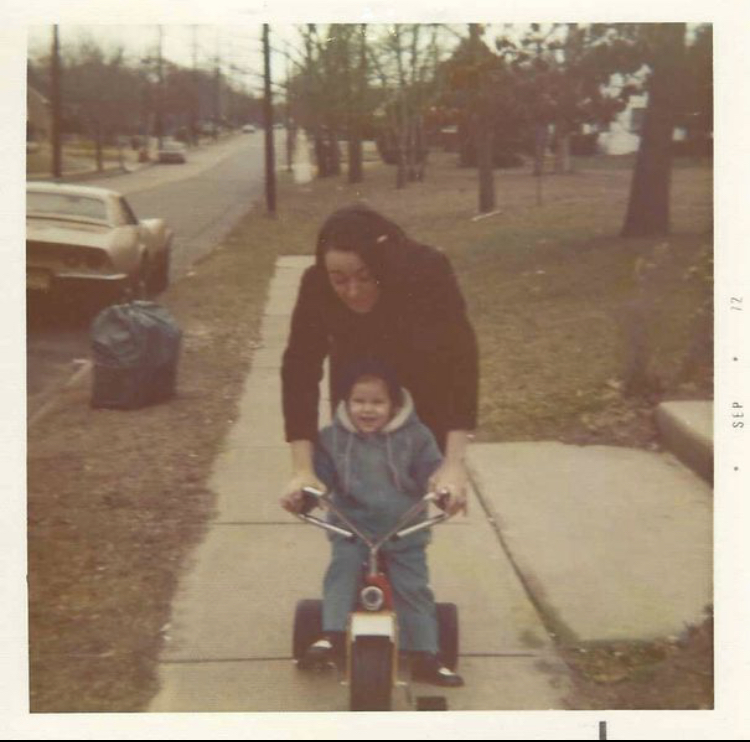
It’s truly amazing how we can’t seem to fully appreciate our parent’s good advice until we reach a certain age. Whatever age that is for each of us as individuals, it can easily be precipitated by having children of our own. As my kids started to grow and required age appropriate boundaries, I found myself, as if from a script, effortlessly uttering the very same guidance I received in my own childhood.
My mom had some of the best sayings when I was growing up. Two of the phrases that stand out always went hand in hand. She would tell me, “I’m sorry if what I have to say hurts your feelings, but it’s the truth. I’m not sorry I said it. I’m sorry I had to.”
Ouch. I guess the truth really does hurt.
The main reason much of her instruction was “un-receivable” at the time was because the words were delivered during discipline. Completely understandable, right? We usually aren’t open to hearing that we are wrong and that are parents know better in our teens. The irony is, however, her words immediately gave us common ground. She didn’t want to have to say what she said, and I certainly didn’t want to hear it. But it’s what we both needed to do. Her “apology” for saying what needed to be said let me know she didn’t take pleasure in having to discipline me. It created space for me to examine my own behavior in order to self correct, and encouraged me towards seeing the need to formulate an apology of my own.
It may seem cliche’, but it really was pain with a purpose. She took her job of raising me and my siblings up very seriously and felt there was no higher calling that getting her parenting right. She wanted to be sure that we had everything we needed to grow into people who could deal with reality, tell ourselves the truth about our own behavior, and have both self and other’s awareness regarding our actions, understanding that everything we do affects at least one other person.
So many of her words made themselves at home in my mind and heart without my even realizing it. Over time, they became a deep well of resources that I was able to draw from time and again while raising my own children. To this day she is the person from whom I have learned the most. Her love and care, words and instruction are all woven into the fabric of my being, just like my DNA. I simply wouldn’t be who I am today, as a person or as a parent, without her.
As we approach another Mother’s Day, I find myself more reflective and so very grateful with each passing year for all that she has taught me.
Hebrews 12:11 No discipline is enjoyable while it is happening—it’s painful! But afterward there will be a peaceful harvest of right living for those who are trained in this way.
What is something your mom did or said that has become a part of who you are, too?
If you are a parent, is it something you incorporate/plan to incorporate into your own parenting or are you/will you do something totally different?
“Spiritual freedom is deliverance from the power and bondage of sin so that we can serve the living God as well as his people. It is freedom from legalism and the control of the flesh so that we can experience the substitutionary, resurrected life of Christ. It’s living a “thank you” life and a “want to” life (relationship) rather than a “have to” life (law).” – Tony Evans Bible Commentary


 hindsight
You must be logged in to post a comment.